Contents 4
AI has been around for a few years now, but I think 2026 is the year that brought the most change. Hardly two weeks went by without a new model, and the way people use AI shifted every couple of months. The ChatGPT release notes alone show new models added on September 3, September 22 and October 26, 2026. That is a span of less than two months.
AI services like Claude, ChatGPT, Qwen and Grok have become so much smarter in that time. AI has gone beyond being a calculator or a search tool, and you can now call it a real work assistant or a colleague. Speaking for myself, I can hardly imagine working without AI.
As a practitioner, I feel the big virtues are still the same, like seeing the overall flow of the work and keeping its purpose in mind. Within that, though, I feel the bar for people who are good at their work is shifting. I'm surprised by the change I'm feeling, and quite shaken by it too. Of course, what I write here is my personal view, not a definitive answer.
Now that AI does so much of the work for us, what work is left for people? In this post, I'll look at which standards I feel matter less as of November 2026, and which abilities matter more.
What matters less for doing good work in the age of AI?#
Let me start with the standards I feel no longer matter as much as they used to. They are meticulousness, perfectionism and focusing on one task at a time.
(1) Checking every detail by hand matters less than it used to, I feel. Meticulousness is still a virtue we need. But much of what people used to check carefully by hand can now be checked by AI instead.

AI can check for anything missed, down to the last detail, far faster and more precisely than a person can. Unless AI disappears, I think it's reasonable to leave this kind of work to it.
(2) I feel it's better to put something rough out first and refine it with AI than to take a long time getting it perfect. The move away from perfectionism was around before AI appeared. The idea was that it's better to deliver quickly, or on deadline, even if the result is a little less than perfect. Now that we work with AI, that idea has become much clearer.
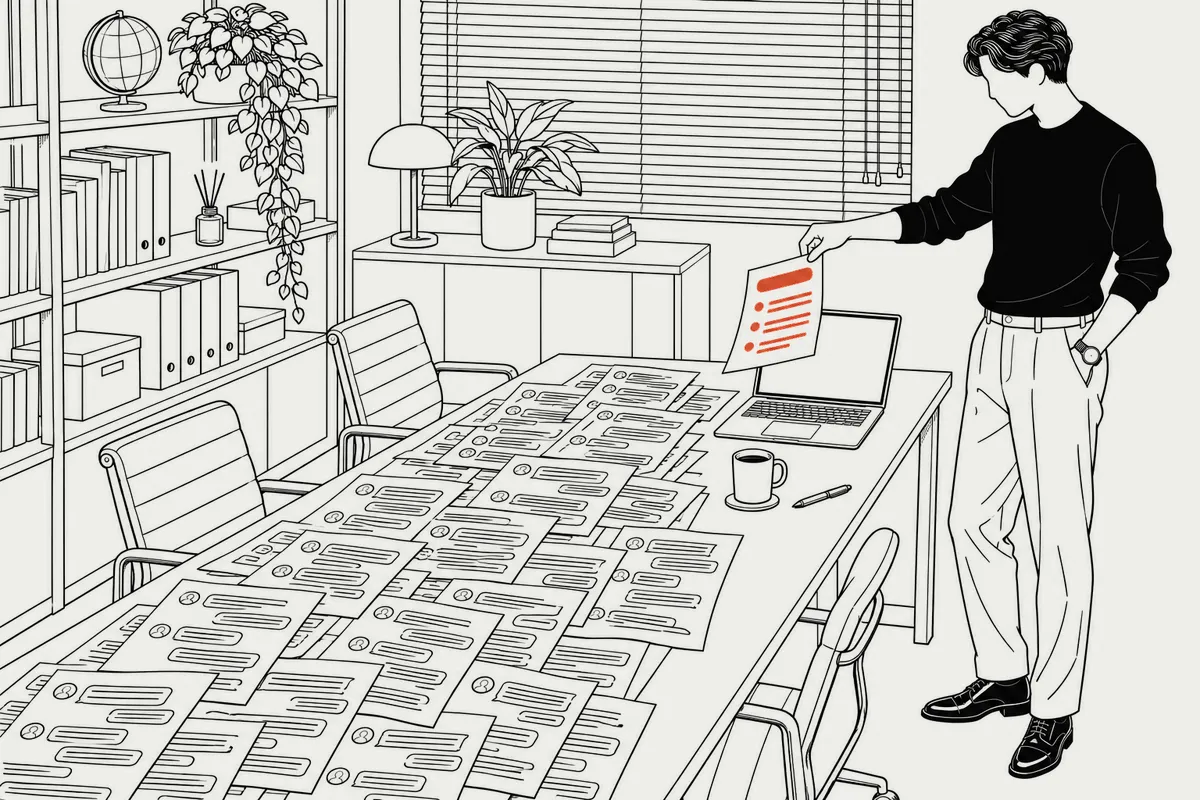
Even when an idea is rough, it seems better to put it in front of AI and try it. Once it's out there, you can improve the idea and sharpen it together with AI. Whether you want feedback on what to fix or you're looking for what to explore next, AI can show you meaningful paths, like a curator.
(3) Focusing on one task at a time, I think, now tends to waste time. This one is admittedly more about method. Back when people carried out the work themselves, finishing one task with full focus before moving to the next may have been more effective. That is how I worked too.
But working with AI changed my mind. While the AI works in one session (one continuous conversation with AI), another session can work on something else at the same time, from a completely different angle. These days I feel that running several tasks side by side, in parallel, uses time far better than finishing them one by one, in series. Handing AI a single task and waiting for the result is, in a word, a waste of time.
Looking back, meticulousness, perfectionism and focus on a single task all seem to have been virtues for a time when people carried out the work themselves. Now AI can take on much of that execution. What, then, is asked of people now?
Metacognition and directing: knowing what AI doesn't know and conveying the purpose#
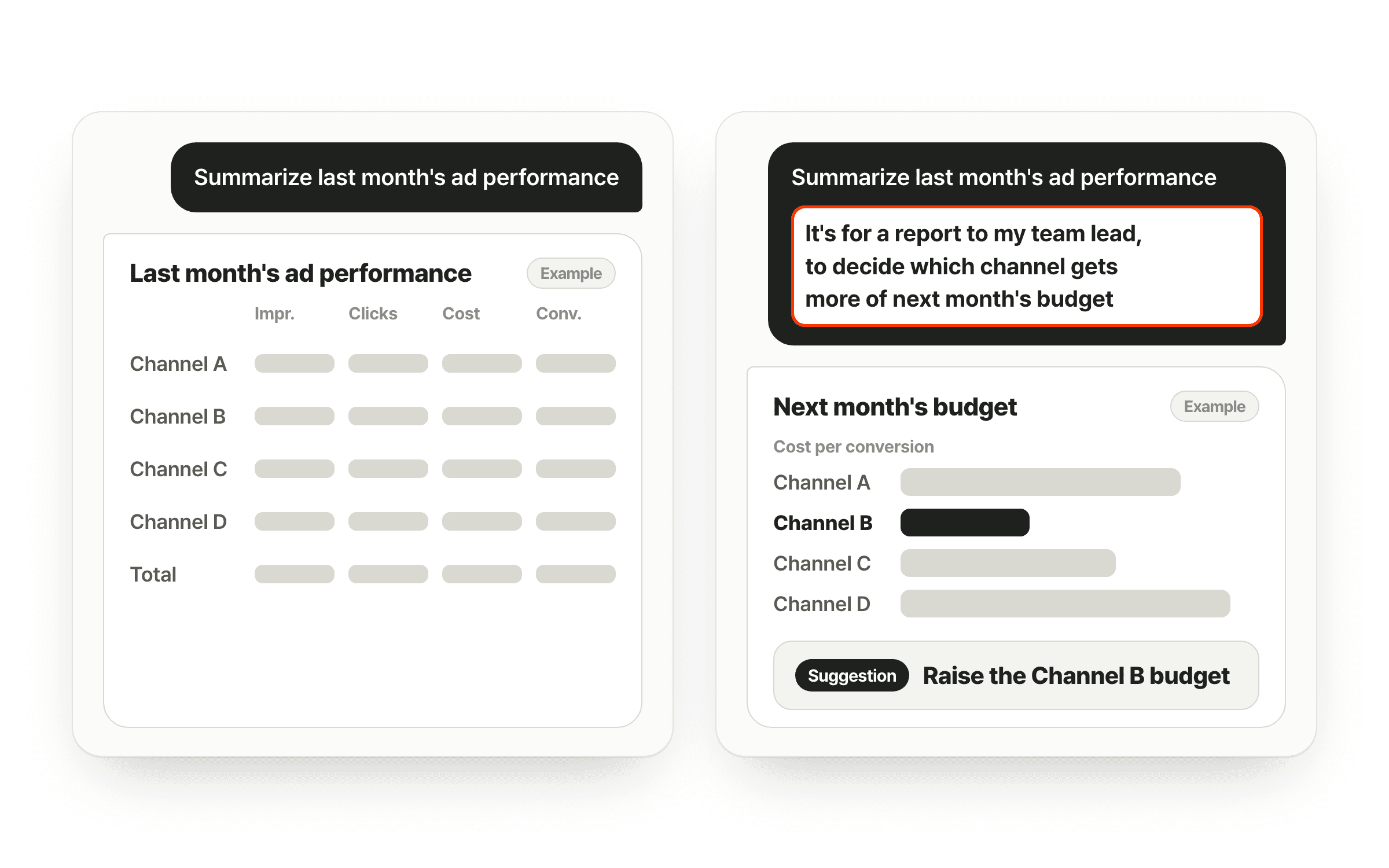
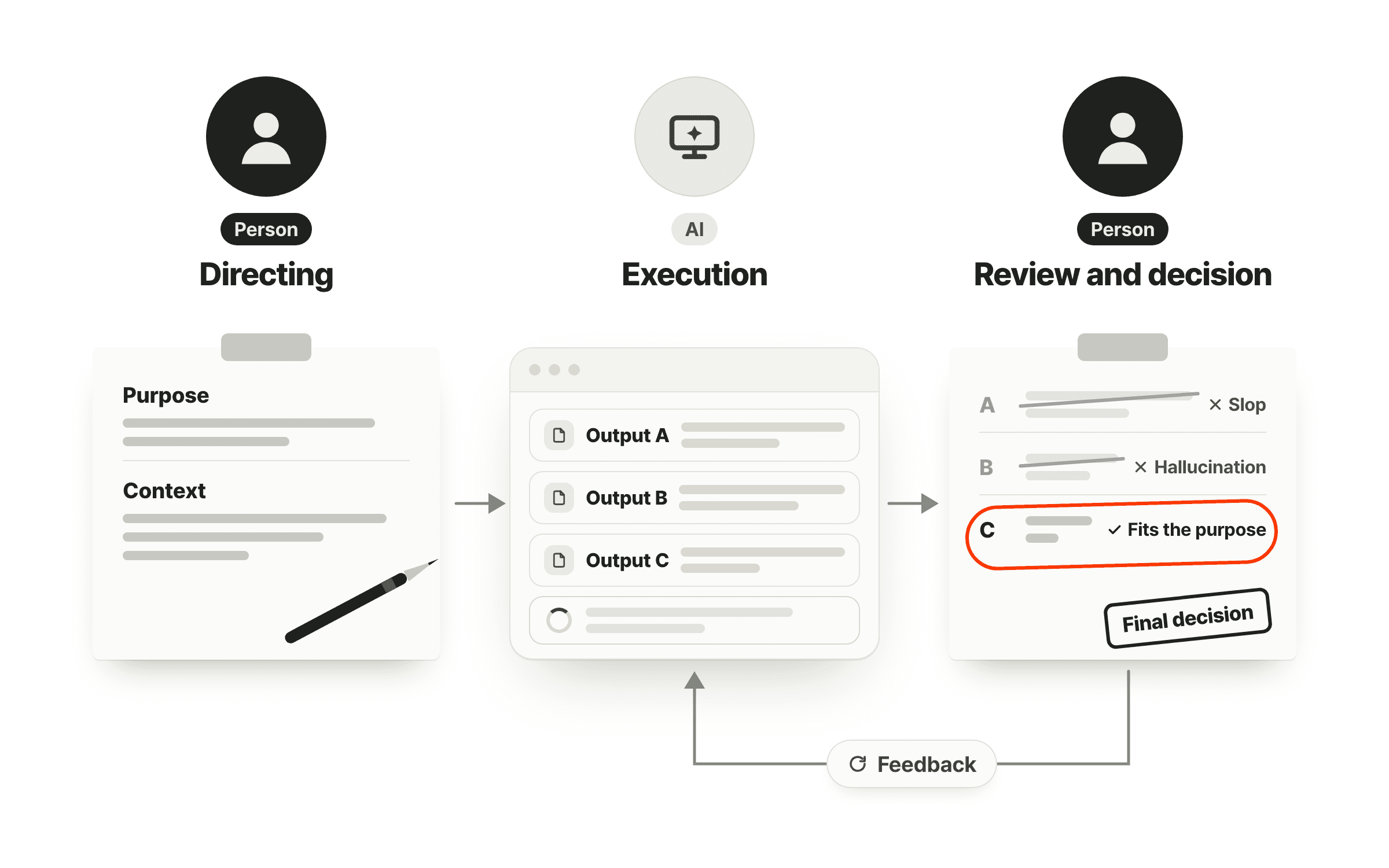
Of the abilities asked of people now, the first ones I want to name are metacognition and the ability to direct the work toward its purpose. Metacognition originally means the ability to recognize for yourself what you know and what you don't. When you work with AI, I think what matters most is recognizing what the AI doesn't know. From there, you can see which context to give it and how to put it across.
Of course, when people worked together it was also important to organize the information the other person didn't have, from that person's point of view, and to state the purpose of the work clearly. But when working with AI, I feel this communication has become more important than ever. That is because I think what AI produces is like a mirror that reflects my request. Context that isn't in the request won't be in the output either, and a request with a vague purpose tends to produce output with a vague direction.
I think you also need to know what AI is good at and what it isn't good at. When the AI stumbles, I suspect part of what people need now is to notice the problem quickly and find a way to fix it.
Once you have conveyed the purpose and context well enough, can you use what the AI gives you as is?
Purpose-driven decisions: sorting through AI's output and making the final call#
As of 2026, I think it's still hard to use what AI makes as is. It isn't there yet. It feels like we're at a stage where you have to go through several rounds of feedback with AI to get a result you're satisfied with. For now, it seems a person still has to be the final reviewer and decision-maker for the output. That is why I suspect the most important ability now is sorting through AI's output in light of the purpose and deciding which of it becomes the final result.
AI pours out a lot of output quickly, but slop and hallucination can be mixed into it. Slop is output that looks plausible but has little use, and hallucination is when AI states something untrue as if it were fact.
So a person has to hold AI's output up against the purpose set at the start, filter out the slop and hallucination, and tell AI which direction to revise in so that it can try again and produce something usable. Deciding which of those refined results goes out as the final one is also the person's job.
I think that once AI output starts going out as is, without a person's review, nobody can vouch for the quality of the work from that point on. The last step that would catch slop and hallucination is gone.
Wrapping up#
This post is really a personal record. Working with AI, I can feel firsthand that my own way of doing good work is changing. Until now I tried hard to be meticulous and sharpened my eye for detail, and with my perfectionist streak, I was the kind of person who couldn't start something, or put it out there early, unless I felt sure about it. I still did work I was satisfied with by my own standards, but working with AI, I felt my old way becoming my own bottleneck. Reassessing my abilities one category at a time and rebalancing what each is worth was a little surprising, felt like a bit of a loss, and even felt slightly unfair. I've decided to take it as proof of how hard I worked by the old standards. Even now, as AI changes by the day, I'm trying to keep up and become someone who works well with AI.
As I've said several times, this is my personal view and I know full well it isn't a definitive answer. I don't know how these thoughts will have changed a few months from now either.
Still, on this blog I want to record the trial and error and the questions I run into working with AI, as they are. I think writing them down will mean something to me, both as an asset for my future self and as topics that readers and I can relate to and share. I'll do my best to keep posting from here on. See you in the next post.

I am a growth marketer who consults on growth marketing and AI adoption.